My Dog Graduated Top of His Class at Boarding School. Two Weeks Later, He Peed on My Couch While Staring Me in the Eyes.
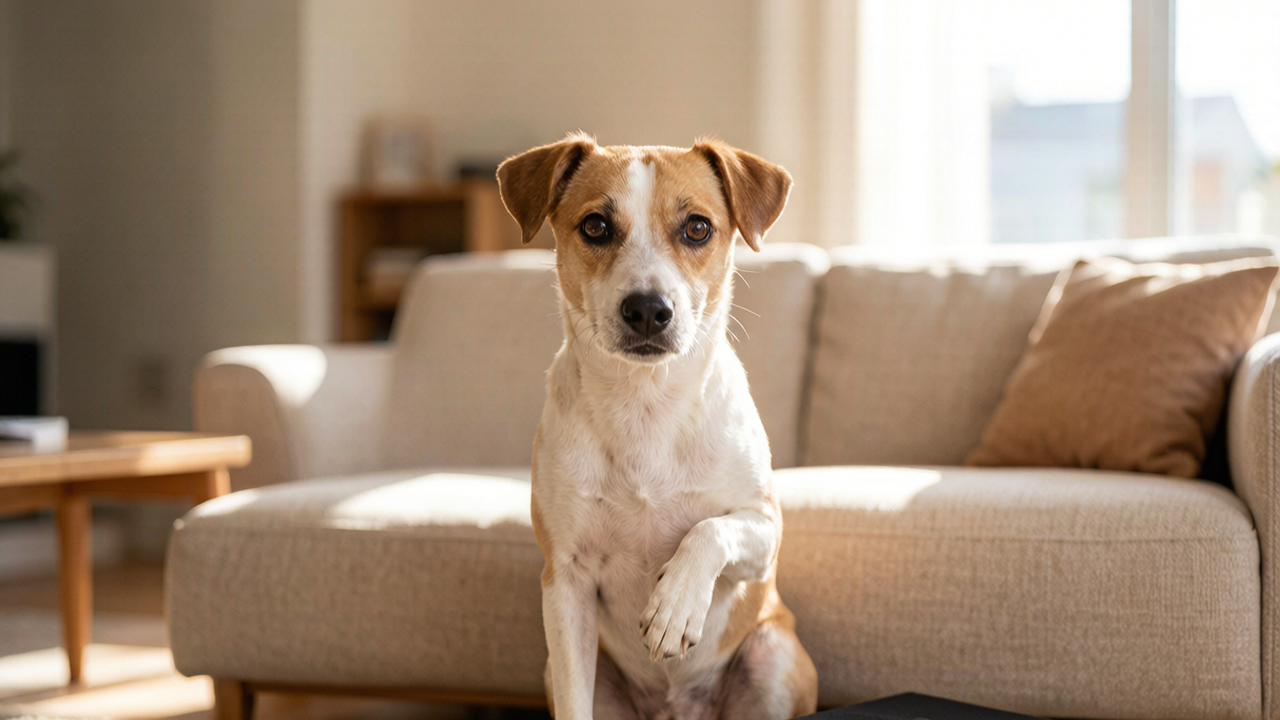
I paid $3,200 for a four-week board-and-train program. When I picked Cooper up, he walked on a loose leash like Westminster. He stayed on his mat while I made dinner. He looked at me before going through doorways like asking permission from a bouncer.
For six days, I lived with a perfect dog. Day seven, he pulled so hard my shoulder made a sound I don't want to describe. Day fourteen — the couch incident. He made eye contact the whole time.
I stood there staring at my $3,200 puddle of regret and thought: Did I just get scammed? I didn't. What happened has a name.
It's not "forgetting" — it's contextual learning
Dogs are terrible at generalizing. Cooper learned "sit" in a sterile training room with rubber flooring, fluorescent lights, and a trainer who moves with military precision. His brain encoded the entire environment as part of the command. My kitchen has salmon smells, dishwasher hum, hardwood floors, and a handler who's not a professional. This isn't stubbornness — animal behaviorists call it "contextual learning," and it's one of the most predictable patterns in dog training.
A veterinary behaviorist told me roughly 80% of dogs regress within the first month of coming home from board-and-train. The problem boils down to three things: the handler changed (and so did the rules), the old environment triggers old habits, and the mental load of transitioning back to a less structured household is real.
What actually worked
One room at a time. I picked a single room — my home office with minimal distractions — and spent five days rebuilding every command from scratch there. Same hand signals, same marker word ("yes"), same release word ("free"). He nailed them in the office by day three. Day six we moved to the living room — he looked confused for thirty seconds, then something clicked. Three-minute rule. Not training "sessions" — 90-second bursts woven into daily life. Sit-stay before meals, wait at the door before walks, down-stay during commercials. The behaviorist called it environmental proofing. House rules for ME. Sticky note on the fridge: "Cooper does not get attention when he jumps. Period. Even if he's cute. Even if I'm in a good mood." My inconsistency was the biggest variable — once I stopped being the wildcard, Cooper stopped testing the rules. Home handoff session. Two hours with the trainer at MY house, coaching me. She caught things I'd never notice: my hand signal drifted a few inches, my marker timing was a half-beat slow, I was repeating commands twice without realizing it. Dogs notice these things. They matter.
Two months of consistency. By month six, Cooper was genuinely reliable — recall worked at the park, doorbell manners held up. Not because he "finally got it," but because we'd done thousands of correct repetitions across dozens of contexts. If your dog just came home from training and old behaviors are creeping back, you're not failing. You're just at the part of the process where the real work happens — the part that happens in your living room, not the trainer's facility.
🐾 Enjoyed This Article?
Save it for later, share with a fellow pet parent, or check out more tips on our homepage!
When Regression Is Actually a Red Flag
Before you blame yourself or the trainer, rule out the body. The single biggest lesson from Cooper's "graduation then relapse" was that pain changes behavior faster than any training lapse does. A UTI, a sore hip, even early arthritis in an older dog can undo months of "sit" and "stay" overnight. If the regression shows up as new sensitivity to touch, limping, or accidents in a previously house-trained dog, skip the reboot and call your vet first. I wasted two weeks re-training before a $40 exam found a minor ear infection that made him flinch at the collar.
The 72-Hour Reset That Saved Us
Once health was cleared, I didn't start over — I dropped the criteria, not the routine. Three days at step one (treat for eye contact, nothing harder), then one step up, then hold. The mistake most people make is jumping back to the hard version and confirming to the dog that "training = pressure." Lower the bar for 72 hours and let the wins stack again. If you're in the thick of it, this piece on breaking the poop-eating habit uses the same "shrink the ask" approach, and these treat hacks cover the motivation side. For the full foundation, see the new dog owner's survival guide.
When Cooper Backslid (and How We Got Back on Track)
Cooper nailed "stay" for a week, then forgot it the day a contractor came over. Regression isn't failure — it's a dog telling you the environment changed faster than the skill was solid. We dropped back to an easier version, rewarded heavily, and rebuilt before raising the difficulty again.
If your dog is also anxious when alone, pair this with our separation anxiety plan. For reactivity on walks, see leash reactivity fixes. Short, calm reps beat long frustrated ones.
Lower the Bar Before You Raise It
When Cooper regressed, the fix was almost always to make the task easier for a few days, then rebuild slowly. A dog that "forgot" a cue is usually over-threshold, not stubborn — the environment changed faster than the skill was solid. Shorter sessions in a quieter room got us further than repeating the failure and frustrating us both.
Pair this with separation work if alone-time is the trigger, and remember that consistency beats intensity. Five calm reps beat twenty angry ones.