My Dog Turned Into a Psycho Every Time We Saw Another Dog — Here's What Actually Fixed It
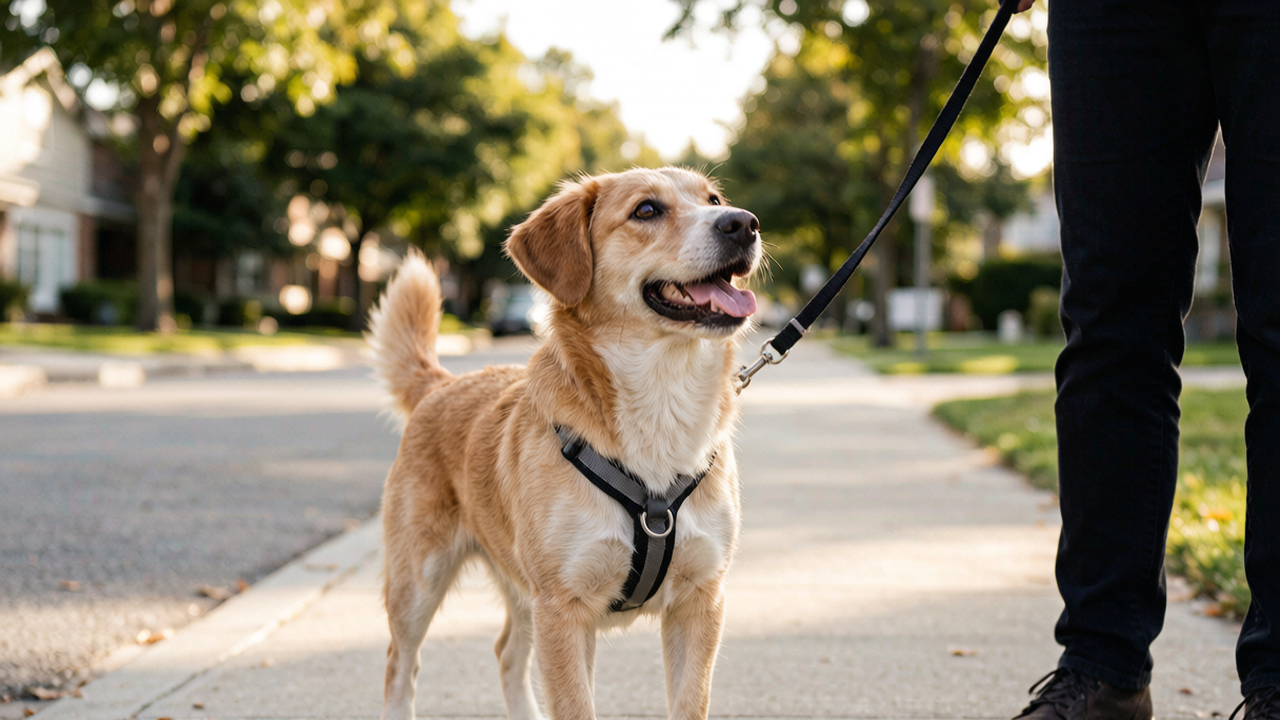
I still remember the moment I became that person in the neighborhood. The one whose dog lunges and barks like a maniac while everyone crosses the street. My golden retriever mix, Benny, was an angel at home. But clip a leash on him and walk past another dog? He turned into a snarling, spinning tornado.
For months I thought Benny was just "aggressive." It was my vet who finally set me straight — he wasn't aggressive at all. He was terrified. The leash trapped him. He couldn't run, so his brain defaulted to "SCARE THEM OFF FIRST."
If you're red-faced from yet another walk that ended in apologies to a stranger: this isn't a bad dog. It's fear. And it's fixable.
What Leash Reactivity Actually Is
Leash reactivity isn't disobedience. Barking and lunging on leash is almost always one of two things: fear-based (trapped and panicking) or frustration-based (desperately wants to greet but can't). Punishment makes both worse. If Benny lunged and I yanked his collar, his brain didn't learn "don't bark" — it learned "SEE? Every time I see a dog, my neck hurts!" I was accidentally confirming his worst fear.
Working Below Threshold
Threshold is the distance where your dog notices the trigger but can still think. My first real step: for two weeks, I didn't let Benny see another dog up close. Not once. I crossed the street before he spotted them. I walked at weird hours. His stress hormones finally had a chance to come down. Those two weeks of zero reactions were like hitting reset on his nervous system.
The "Look at That" Game
Once Benny was calmer, I learned this from a trainer: reward your dog for simply looking at the trigger. We sat 200 feet from a fenced dog park. Benny spots a dog → I say "Yes!" → hot dog piece. Within ten minutes, he'd spot a dog and whip his head around to me like "okay, where's my payment?" Over weeks at gradually closer distances, his default went from panic to anticipation.
Emergency U-Turn
Real life doesn't cooperate. I taught "this way!" — practiced first at home, then on empty streets. Say it in a happy voice, turn 180 degrees, jog away. Jackpot treats when he follows. A month later, an off-leash lab charged us on a trail. "This way!" — Benny spun and followed. We jogged behind a parked car while I scattered treats. The lab's owner apologized. Benny was too busy snuffling for chicken to care. Six months earlier, that scenario would have ended with me wrestling a 65-pound dog.
What Worked vs. What Didn't
Front-clip harness — game changer. Pulls their shoulders back toward you instead of letting them lunge forward. Treat pouch on your waist — you need treats NOW, not 5 seconds later after fishing in your pocket. High-value treats only — hot dogs, cheese, freeze-dried liver. You're competing with intense emotion. Use the good stuff. Retractable leash — threw mine away. Zero control. Random walks as "training" — that's just gambling. Structured sessions in controlled environments moved us forward. Professional help — two sessions with a positive-reinforcement trainer caught habits I didn't notice, like tightening the leash when I saw a dog (which Benny read as "mom's nervous").
The Real Timeline
Every Instagram makes it look like 3 days. Benny took about 8 months to get truly reliable. First progress in about 3 weeks. Consistency took months. Still have occasional tough days two years later. Every reaction-free walk builds the right pattern. Every explosion sets you back. Early on, avoiding reactions matters more than making progress.
Benny now walks past other dogs without a sideways glance. He'll never be the dog who play-bows at strangers, and that's okay. He trusts me to keep him safe. I look forward to walks now instead of dreading them.
🐾 Enjoyed This Article?
Save it for later, share with a fellow pet parent, or check out more tips on our homepage!
The Walk That Changed Everything
Cooper used to erupt at the end of the leash whenever another dog appeared — lunging, barking, the whole cortisol dump. The fix wasn't a gadget, it was distance. I found the line where he noticed a dog but stayed calm (about 50 feet), marked that calm with a treat, and slowly closed the gap over weeks. The first walk I did this, nothing dramatic happened — and that was the win. Reactivity is a training problem solved in small inches, not a personality flaw. The leash mechanics overlap with the pulling fix, so I'd read both.
Why Yelling Made It Worse
My instinct was to correct him loudly — and it poured fuel on the fire, because to Cooper my panic confirmed "yes, the other dog is danger." Switching to a calm, neutral "let's go" and turning away taught him the sight of a dog predicted good things (treats) instead of a scolding. If the reaction is really separation anxiety wearing a walking costume, the separation solutions are the deeper read. And the foundation for a calm walking partner is in the new dog owner's guide.
Frequently Asked Questions
What causes leash reactivity?
It is usually frustration ("I want to say hi and the leash stops me") or fear, made worse by the leash itself, which removes the option to move away. It is not the same as true aggression.
Can it be fixed?
Often, yes, with counter-conditioning: reward calm looking at another dog from a distance, and gradually close that distance. Progress is slow but real.
What should I avoid?
Do not yank or scold, and do not let the leash go tight, both raise arousal. Also avoid head-on approaches; crossing the street early works better.
Training Steps
- Start at a distance where your dog notices but stays calm.
- Mark and treat the moment they look at another dog.
- Use a "U-turn" to create space before they hit threshold.
- Keep sessions short and end on a win.
Common Mistakes to Avoid
- Do not yank or scold - it spikes arousal and confirms other dogs equal trouble.
- Do not close distance too fast - if the dog reacts, you were past threshold.
- Do not let the leash go tight - tension reads as "I am tense too", which fuels reactivity.