Dog Ear Infections: The $400 Mistake I Made at the Lake (and What I Do Differently Now)
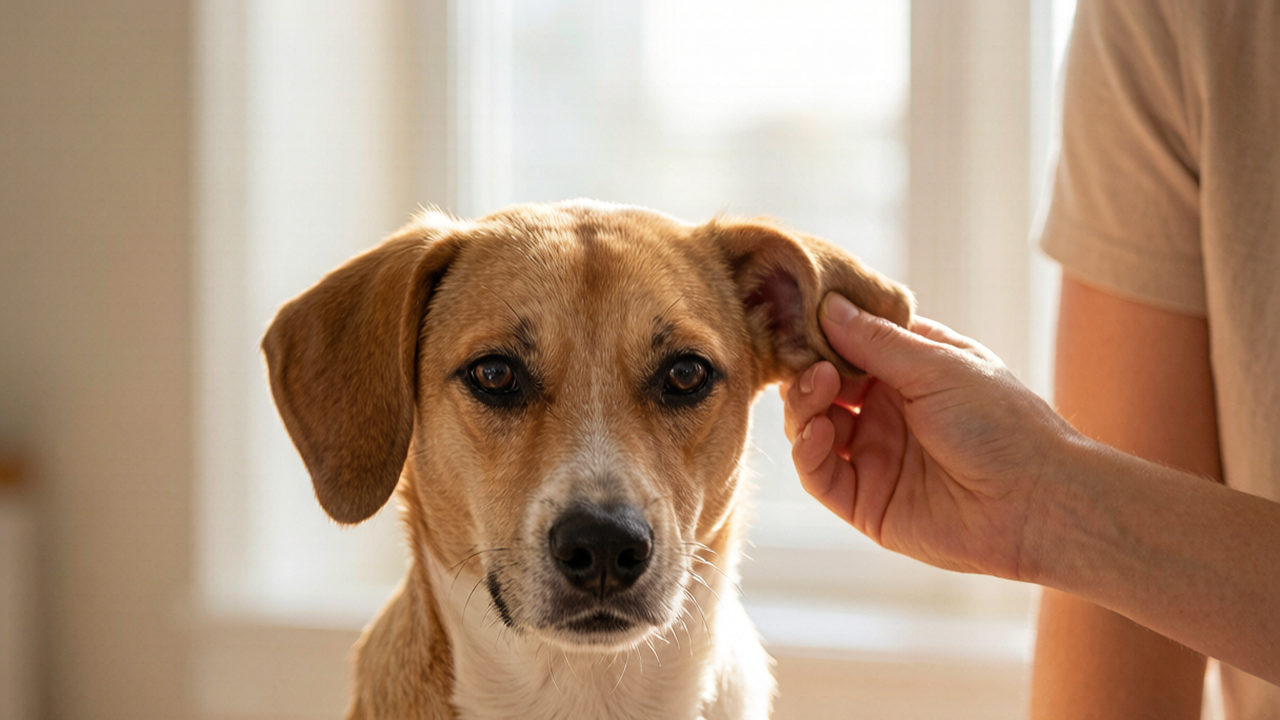
Tuesday morning. I leaned down to scratch behind Cooper's ears — my border collie mix — and the odor hit me like a gym sock that had been marinating for a month. Musty. Sour. Wrong.
He'd been shaking his head for three days. I chalked it up to allergies. He'd been rubbing his face against the couch cushions. I told myself it was probably nothing.
It was not nothing. It was a raging yeast-and-bacterial double ear infection. The bill came to $387 — including sedated ear flush because there was so much gunk packed in his canal that medication couldn't reach the infection. One lake swim. That's all it took.
Why summer destroys dog ears
A dog's ear canal is L-shaped — goes down, then takes a sharp turn. That L-shape means moisture gets trapped. Floppy ears, hairy canals, allergies, swimming — any one of these turns the ear into a warm dark incubator for yeast and bacteria. Cooper had all four.
The 3-minute post-water routine that fixed it
Dry microfiber cloth to the outer ear. Veterinary ear drying solution squirted in, massage base for 20 seconds, let him shake, wipe what comes up. Every single time he gets wet. Three minutes. Two summers infection-free.
Weekly ear check: flip flap back, sniff, look for redness. Healthy ears are pale pink and smell like nothing. Dark gunk or any odor = clean with vet solution same day.
What NOT to put in dog ears
No apple cider vinegar, no hydrogen peroxide, no tea tree oil. Peroxide damages ear tissue. Vinegar burns inflamed skin. Essential oils can be toxic. My vet's rule: if the ear is red, swollen, painful, or has discharge — skip home remedies. Vet first.
When it's an emergency
Yelping when you touch the ear = pain = needs prescription meds. Head tilt or walking in circles = infection may have reached inner ear = immediate vet. Swollen ear flap like a balloon = aural hematoma from head shaking = surgery.
Omega-3 fish oil in his dinner reduced allergy-driven inflammation. Not a cure, but combined with the drying routine, it's kept him stable for two summers.
🐾 Enjoyed This Article?
Save it for later, share with a fellow pet parent, or check out more tips on our homepage!
The Lake-Day Protocol I Follow Now
After the $400 lake incident, the rule is simple: any water in the ear gets flushed within the hour. I keep a bottle of vet-approved ear cleaner in the car and do a 30-second fill-massage-wipe on each ear the moment we're back at the truck. Moisture + warmth = yeast party, and the flank of a swimming dog is the perfect petri dish. The $400 was the "wait and see" tax.
The 10-Second Weekly Check
Every Sunday I lift each ear, sniff (yeast smells sweet-sour), and glance for redness. Catching it at "slightly waxy" instead of "bleeding and head-tilted" is the difference between a $20 cleaner and a $300 culture. Cats get it too — this cat ear guide has the at-home-vs-vet line, and if a trip to the vet is involved, the car-sickness plan keeps the ride from making things worse.
After a Lake Swim: Protecting Cooper's Ears
Cooper loves water, and his first summer of lake swims ended with a red, smelly ear. Now we dry his ears gently after every swim and watch for head shaking or a sour smell — the early signs we missed the first time. Floppy ears trap moisture, so the routine matters more than the breed.
Persistent scratching can point elsewhere too; our guide on why dogs scratch covers the other causes. And any pain, swelling, or discharge means a vet trip, not a home remedy.
The 30-Second Post-Swim Check
We now keep a soft towel by the door and dry Cooper's ears every time he comes in wet, then watch for head-shaking the next day. Catching it early turned a recurring infection into a rare one. Smell is the tell — a healthy ear doesn't have an odor, and a scratch at one side is worth a look before it escalates.
See other itch causes if the scratching continues after the ears are dry and clean.
Frequently Asked Questions
Why are ear infections more common in summer?
Warm, humid weather plus swimming creates a perfect environment for bacteria and yeast. Dogs that swim a lot or have floppy ears are especially prone because moisture gets trapped.
How do I prevent summer ear infections?
Dry the ears thoroughly after every swim or bath, use a vet-approved drying solution during peak season, and do a weekly visual check. If your vet advises it, keeping hair plucked from the canal can also help airflow.
Which dogs need the most attention?
Floppy-eared breeds (spaniels, retrievers, hounds), frequent swimmers, and dogs with known allergies top the list.
Summer Ear Care Routine
- Dry ears completely after water exposure.
- Use a vet-approved ear cleaner weekly in swim season.
- Watch for head shaking or odor as early warnings.
- Ask your vet about plucking if hair blocks the canal.
Common Mistakes to Avoid
- Do not leave ears damp after swimming - moisture is the top trigger for summer infections.
- Do not over-clean healthy ears; daily digging irritates the canal.
- Do not ignore a head tilt - it can mean the infection reached the inner ear.
Your First Steps This Week
- Dry the ears completely after every swim or bath - moisture is the main trigger.
- Use a vet-approved cleaner weekly during swim season.
- Do a quick smell check each weekend; odor shows up before pain.
- Call the vet if you notice a head tilt or balance loss.