I Thought My Cat Would Never Come Out From Under the Bed — Here's How I Finally Got Her and My Dog to Coexist
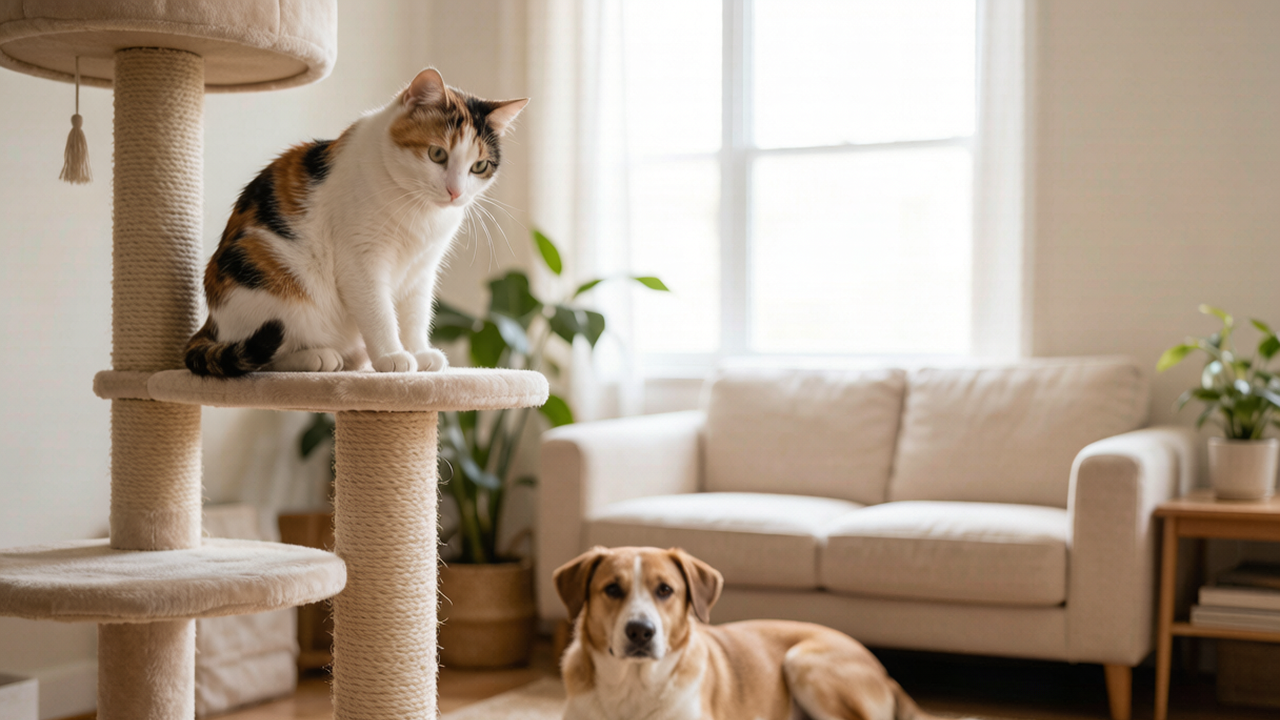
Three days. That's how long my cat Mochi hid under the guest bed after I brought home a rescue dog. She only crept out at 3 AM to use the litter box. And Jack, my new shepherd mix, spent those same three days whining at the door.
I had done exactly what every adoption pamphlet warns against: let them meet face-to-face on day one. Jack wagged and took one excited step. Mochi vanished under the sofa. I spent the next 72 hours googling "can cats and dogs ever really get along."
They now nap on the same couch. But getting there took admitting my "they'll figure it out" strategy was garbage.
Why Rushing Backfires
When Jack wagged and leaned forward, he meant "hello friend." When Mochi saw that posture, she read "predator about to pounce." Same gesture, opposite meanings. A botched first meeting creates fear associations that take months to undo.
The Reset: Week by Week
Week 1: Separate but smelling. Guest bedroom = Mochi's territory. Fed them on opposite sides of the closed door. Swapped bedding daily so they'd learn each other's scent.
Week 2: Visual, zero access. Stacked two baby gates with a blanket leaving 6 inches visible. Short sessions — five minutes max. Jack leashed, Mochi on her cat tree. Treats for looking without reacting. By day five, Jack glanced at the gate then back at me for treats. Mochi watched him like a nature documentary.
The first face-to-face. Living room, neutral territory. Jack tired from a 45-minute run. Mochi on the cat tree with an open escape route. Four minutes. Ended before anything went wrong. Repeated daily.
The Breakthrough
Week three: I was reading on the couch. Jack sprawled on the floor. Mochi jumped onto the opposite arm and curled up. Five feet apart. Nobody chased. Nobody hissed. Then a week later, she walked right past his sleeping body to get to her food bowl. That's when I knew we'd made it — not when they became friends, but when they became boring to each other.
What I'd Do Differently
Vertical space is not optional. Cat shelves everywhere. Separate feeding forever. Some things aren't worth negotiating. Exercise the dog before sessions. Every good session came after Jack was tired. Let the cat set the pace. Every time I nudged things along, it backfired.
They're not soulmates. They don't cuddle. But they coexist. Mochi walks through the house with her tail up. Sometimes they boop noses. The biggest change was me — when I finally relaxed, they did too.
🐾 Enjoyed This Article?
Save it for later, share with a fellow pet parent, or check out more tips on our homepage!
The Baby-Gate Setup That Changed the Game
Skip the "hold the dog, hope the cat comes out" phase — it just builds tension. I put a pressure-mounted baby gate across the doorway so they could see and smell each other with a physical barrier between them. Meals on opposite sides of the gate turned "intruder" into "neighbor at dinner." After a week of calm gate-time, the first supervised no-gate meet lasted 90 seconds and nobody fled.
Reading the Cat's Tail (My Cheat Sheet)
Twitching tip = "I'm done, back off." Puffed and low = fear, not aggression. Flat against the body under the bed = give her the day. The dog's job was easier: reward every glance-away from the cat with a treat so "ignore the cat" paid better than "stare at the cat." If your cat is also a door-dasher, this escape fix overlaps heavily, and regression in either animal is normal — see why training regression happens.
Bringing Mochi and Cooper Together, Slowly
We introduced them over three weeks, not three days. Scent swapping came first — a towel from each near the other's food bowl — then meals on opposite sides of a baby gate, then short leashed meetings with Cooper rewarded for ignoring her. Rushing it is the mistake most people make.
Set up the safe space first with our new-cat guide, and if either animal hides or stops eating, slow down — see why cats hide. A bored dog is the biggest risk, so tire Cooper out before each session.
Frequently Asked Questions
How long does a cat-dog introduction take?
Anywhere from a few days to a few weeks. Rushing is the most common mistake. Let scent meet before bodies do, and only progress when both are calm.
What if they react badly?
Separate them and drop back to the previous step. A hiss or growl is information, not failure. Slow, repeated short sessions beat one long forced meeting.
Should I use a baby gate?
Yes. A gate lets them see and smell each other with a safe barrier, which is far less stressful than a face-to-face encounter on day one.
Step-by-Step Intro
- Swap scents on blankets before any meeting.
- Feed on opposite sides of a closed door.
- Move to a baby gate, leashed dog, calm cat.
- Only allow unsupervisable contact after peaceful sessions.
Common Mistakes to Avoid
- Do not rush a face-to-face meeting - scent must come before sight, and sight before touch.
- Do not skip the scent swap - it is the cheapest insurance against a bad first impression.
- Do not skip a safe space - the cat needs an escape route the dog cannot follow.
Your First Steps This Week
- Swap scents first - trade blankets so they meet smell before sight.
- Feed across a closed door - a positive association at a safe distance.
- Use a baby gate - let them see each other with a barrier between.
- Keep the cat's escape route open - a safe space the dog cannot reach.